Walk through the paddock at any weekend track day, autocross event, or enthusiast car meet, and one visual detail inevitably grabs your attention: wheels canted distinctly inward at the top, tucked deep into the fender arches. To the uninitiated, it looks like broken suspension components or an exaggerated aesthetic modification designed purely for visual drama. To a seasoned track driver or suspension engineer, that inward tilt represents a calculated effort to manipulate physics and squeeze every ounce of mechanical grip from a set of high-performance tires.
Demystifying Wheel Geometry: How Angle Shapes the Footprint
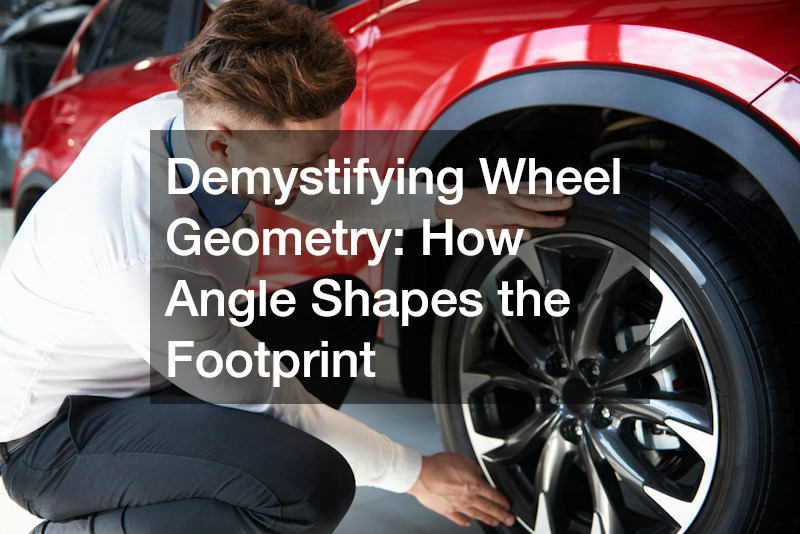
To understand why inward tilt delivers immense grip mid-corner, you first must understand what happens to a car and its tires when turning. Suspension geometry is defined by several interconnected planes, with camber occupying the vertical axis when viewing the vehicle directly from the front or rear.
- Zero Camber: The wheel and tire sit perfectly perpendicular (90 degrees) to a completely flat road surface. The tire tread rests evenly across its entire horizontal width.
- Positive Camber: The top of the wheel tilts outward, away from the vehicle centerline, while the bottom of the tire pulls inward. Aside from heavy agricultural equipment and specialized off-road racing trucks utilizing extreme suspension travel, positive camber is almost never utilized in modern passenger or performance cars.
When a car sits motionless on an alignment rack, a negative angle means the vehicle rests disproportionately on the inside shoulder of the tire. If you only drove in dead-straight lines across endless salt flats, this would be an undesirable condition because it reduces the overall surface area contacting the road.
By dialing in a predetermined amount of static inward tilt during a comprehensive car alignment, you are essentially pre-compensating for this dynamic distortion. As the chassis leans into the corner and the tire carcass deforms under load, the pre-set inward angle rolls flat. At the precise moment of maximum apex load, the tire tread presents an optimal, completely flat surface across the asphalt. This uniform contact patch maximizes mechanical adhesion, stabilizes steering inputs, and allows the driver to carry significantly higher speeds through turns. Achieving this balance is why an accurate, repeatable alignment remains the single most cost-effective performance upgrade in motorsport.
Spotting the Warning Signs: Distinguishing Angle Wear from Scrub Wear
One of the most persistent misconceptions in the automotive world is that negative inward tilt alone is an immediate death sentence for tire longevity. Enthusiasts often pull a destroyed tire from their car, point to the bare metal cords shining on the inner edge, and blame aggressive suspension tilt. While excessive angle certainly plays a role, the true culprit behind rapid tire destruction is almost always an unchecked combination of angle and toe misalignment.
To protect your tire investment, you must learn to read tire wear patterns like an experienced diagnostic technician:
- Pure Camber Wear (The Bevel): When a vehicle runs negative angles with zero toe scrub, the tire wears in a very smooth, progressive slope from the outer edge to the inner edge. There are no rough burrs, saw-toothed blocks, or jagged rubber ridges. The inner shoulder simply reaches the wear bars sooner than the outside edge. While this does reduce total service life, the wear occurs steadily and predictably over tens of thousands of miles.
- Toe Wear (The Tire Shredder): Toe refers to whether the wheels point inward (toe-in) or outward (toe-out) when viewed from directly above. When toe settings are incorrect, the tire is essentially dragged sideways down the road while rolling forward. This dragging action creates a distinct pattern called “feathering.” If you run your hand laterally across the tread blocks from inside to outside, you will feel sharp, raised edges pointing in one direction.
Catching these patterns early requires a diligent inspection routine. Every few weeks, turn your front steering wheel to full lock and visually inspect the entire width of the inner shoulder with a flashlight. Run your palm across the tread to feel for feathered ridges. If you spot uneven scalloping or rapid degradation, take the vehicle to a qualified suspension mechanic to inspect ball joints, tie-rod ends, and control arm bushings for play before checking the alignment.
Ignoring chassis geometry issues is far more consequential than ignoring minor cosmetic exterior flaws like door ding repairs. While a small dent in a door panel is merely an aesthetic annoyance that has no impact on safety, hidden inner-shoulder tire cord failure can cause sudden catastrophic blowouts at highway speeds.
Dialing in the Sweet Spot: Daily Commuters vs. Track Weapon Specs
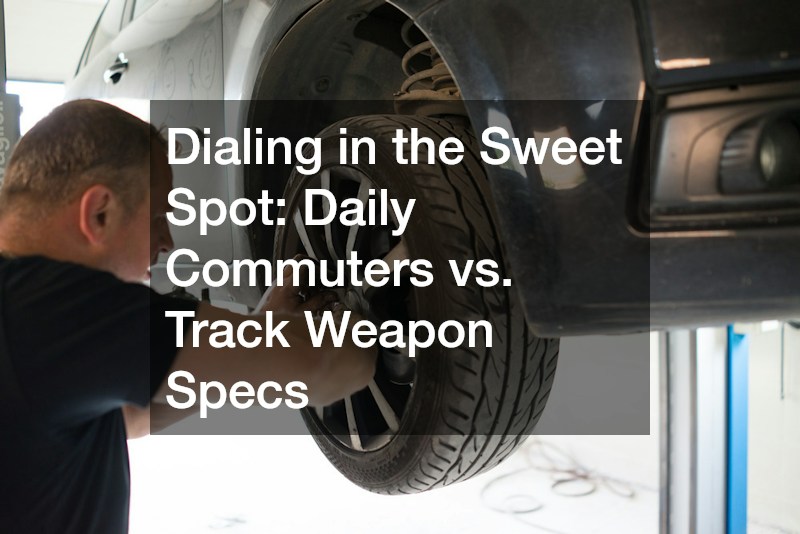
Suspension geometry is an exercise in compromise. An angle that sets a track record at Watkins Glen will ruin a set of high-treadwear touring tires on an Interstate commute. Conversely, factory baseline specifications engineered to satisfy conservative tire warranties will shred the outside shoulders of performance tires during a single twenty-minute track session.
Finding your ideal setup requires selecting a target range tailored to how and where the vehicle is driven:
Baseline Daily Commuters (-0.5° to -1.2°)
Most factory passenger cars leave the assembly plant with mild negative angles, typically between half a degree and one full degree.
- Maximizes straight-line stability and braking efficiency.
- Keeps the contact patch flat during everyday driving, ensuring water channels remain open to resist hydroplaning.
Aggressive Street and Canyon Enthusiasts (-1.5° to -2.2°)
For sports cars, hot hatches, and enthusiast sedans driven on twisty backroads, this middle-ground configuration transforms the vehicle’s dynamic character.
- Noticeably sharpens steering turn-in response and reduces mid-corner understeer.
- Protects the outer shoulder from rolling over during aggressive weekend canyon carving.
Achieving these non-factory targets requires working with a specialty performance shop capable of executing a customized auto alignment rather than a standard tire franchise that simply aims for generic factory “green-box” tolerances. A technician who understands performance setups will take the time to center the steering wheel precisely, compensate for driver ballast weight in the cockpit, and set toe angles to exact hundredths of a degree. Taking care of worn chassis hardware and bushings prior to this process prevents settling that could ruin the setup and lead to premature auto repairs.
Upgrading Hardware: Achieving Adjustability on Lowered Chassis
As soon as an enthusiast installs aftermarket lowering springs or adjustable coilover suspension, the vehicle’s suspension geometry changes fundamentally. Lowering the ride height naturally pulls the suspension control arms upward, pushing the wheels into more negative tilt through the natural arc of their suspension travel.
In multi-link or double-wishbone systems, this natural progression can add an extra degree or more of tilt simply from lowering the car an inch. On MacPherson strut front ends, lowering the car often ruins the roll center and limits dynamic camber gain, leaving you with insufficient negative angle right when you need it most.
To gain full control over your alignment parameters, factory hardware rarely suffices:
- Top-Mount Camber Plates: For vehicles equipped with front MacPherson struts, adjustable camber plates replace the factory rubber upper strut mounts. Featuring slotted bearing housings, they allow drivers to slide the top of the strut inward toward the engine bay to add negative tilt, or outward to reduce it. High-end units incorporate independent caster adjustments, enabling you to increase dynamic steering weight and high-speed self-centering.
- Adjustable Upper Control Arms (UCAs): On double-wishbone front suspensions (common on platforms like the Mazda Miata, Honda Civic, and various sports sedans), camber cannot be adjusted at the strut top. Installing tubular or billet adjustable upper arms allows you to lengthen or shorten the upper link, directly dictating the static angle of the steering knuckle.
When modifying a vehicle, aesthetic upgrades often take center stage. Enthusiasts readily invest in sleek styling, custom wheels, and dark car tinting to enhance the vehicle’s appearance. However, altering stance without addressing underlying mechanics creates an unstable, tire-shredding chassis.
Maintaining suspension performance requires the same level of disciplined scheduling you would apply to household logistics. Just as commercial facilities rely on automatic oil deliveries to maintain smooth operations without manual intervention, performance car owners should schedule routine chassis geometry inspections after major track weekends, off-track excursions, or every 5,000 miles of spirited driving.
Managing Straight-Line Braking, Wet Weather, and Safety Hazards
While extreme inward suspension tilt delivers undeniable cornering speed, it introduces notable drawbacks in straight-line dynamics. Suspension design is always an exercise in physics management, and optimizing a vehicle for lateral grip inherently demands compromises in longitudinal performance.
The most immediate trade-off is straight-line emergency braking performance:
- Longitudinal Contact Reduction: Under threshold braking, the vehicle’s weight transfers forward onto the front axle. Because tires with heavy static inward tilt rest primarily on their inner shoulders when rolling straight, the total tire area contacting the pavement is significantly narrower than on a car with near-zero tilt.
- Premature ABS Activation: With less rubber contacting the road in a straight line, the front tires reach their threshold of adhesion earlier under heavy pedal pressure. Anti-lock braking systems intervene sooner, increasing stopping distances in emergency situations.
Drivers running performance chassis setups must prioritize regular auto brake repair, inspecting brake pads for tapered wear, replacing heat-stressed brake fluid, and verifying that caliper slide pins float freely to maintain balanced stopping power.
In heavy downpours, this uneven pressure distribution prevents the tire from cutting cleanly through standing puddles, significantly lowering the speed at which hydroplaning occurs. If you daily-drive a vehicle with track-focused alignment settings, you must exercise caution in torrential rain, slow down through standing puddles, and replace tires well before they reach their legal wear bars.
Compensating for Body Roll: Sway Bars and Suspension Kinematics
A common beginner mistake is attempting to solve all cornering roll issues through static wheel alignment alone. If a vehicle leans heavily in turns, simply adding more negative tilt until the tire sits flat mid-corner is an inefficient workaround. Excessive static tilt ruins braking stability, accelerates inner tire wear during highway travel, and creates nervous, darty steering over road ruts.
The smarter engineering approach is controlling chassis roll using springs and anti-roll bars, thereby reducing the amount of static negative tilt needed in the first place:
- Stiffening Anti-Roll Bars (Sway Bars): Sway bars connect the left and right suspension assemblies across an axle. When the vehicle attempts to lean in a turn, the bar twists, transferring load to the inside wheel and resisting body roll. By keeping the entire chassis flatter through corners, the outside tire stays closer to its ideal angle without requiring excessive static tilt on the alignment rack.
- Optimizing Spring Rates and Damping: Upgrading to performance coilovers with higher spring rates directly limits suspension compression under cornering loads.
By addressing chassis roll through proper suspension tuning, you can drop front tilt from a tire-shredding -3.5 degrees down to a street-friendly -2.0 degrees while maintaining identical mid-corner grip and dramatically extending highway tire life.
Neglecting this comprehensive tuning approach can lead to severe mechanical interference. Drivers who dial in extreme negative angles simply to tuck wide wheels beneath stock fenders risk suspension components contacting the inner wheel wells, or tires slicing against fender lips under full compression. These violent bottoming-out events can bend steering knuckles, sheer tie rods, or cause sudden tire blowouts that result in expensive auto collision repairs. Proper clearance, bump-stop setup, and suspension travel must always take priority over aggressive stance.
Preserving Your Rubber: Maintenance Protocols for Tuned Alignments

Running an aggressive, performance-oriented alignment does not mean you must resign yourself to replacing tires every six months. By adopting a proactive maintenance routine, you can mitigate uneven shoulder wear, monitor thermal loads, and extract maximum mileage from high-performance rubber:
Executing Specialized Tire Rotations
Standard front-to-back tire rotations are straightforward on non-directional square setups, but performance applications require more deliberate methods:
- Square, Non-Directional Setups: Execute a modified cross rotation (drive axle tires move straight to the free axle, while free axle tires cross over to the drive axle). This balances both inner-shoulder wear and rotational feathering.
- Directional Tires: Tires with directional V-groove tread patterns cannot simply be swapped from left to right without mounting them backward.
Monitoring Tire Temperatures with a Pyrometer
Track-day drivers should rely on a tire probe pyrometer to dial in alignment angles rather than guessing based on visual tread wear:
- Take temperature readings at three points across the tread face immediately after completing a hot session: Outside Edge, Middle, and Inside Edge.
- On a properly aligned road-course setup, the inside edge should run approximately 10°F to 20°F hotter than the outside edge, with the middle temperature falling evenly in between.
Negative camber is neither an aesthetic gimmick nor an unavoidable hazard for tires. It is an adjustable spectrum that balances cornering grip, braking performance, and tread longevity. When dialed in haphazardly, excessive angles paired with incorrect toe settings can ruin a set of high-performance tires in short order. But when calculated with care, supported by the right chassis hardware, and matched to your real-world driving habits, it unlocks immediate steering response and high-speed cornering stability. Treat your suspension setup as an integrated system, monitor your tire wear regularly, and you will enjoy the best of both worlds: tenacious apex grip on the weekends and predictable, even tire wear on the road home.